top of page

HOOTERS
DP PITCH DECK -- AESTHETICS AND APPROACH
The goal is to shoot an ELEVATED COMEDY.
A comedy that serves the funny first but has gravitas and reverence for the characters.
A comedy that has contrast (not high-key!), color, a hint of magical realism, and oh so many back lights.
COMPS / INSPIRATION

Michael Barret (Ted, Million Ways to Die in the West, Kiss Kiss Bang Bang) is my favorite comedy DP. Main reason: he doesn't treat comedies as throw light anywhere, anything goes high-key nonsense. He elevates them with intentional key lights, color, and magical realism.
This image from Ted shows what I consider magical realism comedy. The sun is in all the right places: hard hits on Ted and streaming through the windows. Also Mark Wahlberg has real contrast on his face (at least a two stop ratio). And it works! The movie's premise of a talking teddy bear is absurd. But by grounding the photography in sophisticated lighting and camera work, the comedy has a place to land.


I love the color in this scene -- warm key light, amber hits on the background, and then tied altogether with cyan.

I love how Barret carried that cyan light to an edge light for the scene's establishing shot. He establishes a world with color and carries it through.
What is an intentional key light?
In a surprisingly amount of comedies, the light hitting an actor's face is either light coming from the ceiling or just the collective ambience of a room. The result is a flat look that adds no personality to the actor's face (and for that matter, no commentary on the character). This is what I call an unintentional key light.
An intentional key light is a light placed specifically to light an actor's face to create contrast, sculpt, and in some cases to convey emotion.
To achieve this, I use a soft source at eye-level set at about a 3/4 angle. I always try to have an eye-light and have at least a 1 stop ratio across the face.


These images show one of my favorite intentional key lights. It's semi-hard (I typically go softer for caucasian skin) with the shadow side starting just past the far eye. The contrast is about 3 stops, a lot for a comedy, but I feel works for this scene as the characters don't trust each other.
They both have a big beautiful eye-lights which allows the audience to connect with the actors (eye-light = the character's soul ;-)
The chef's kiss is the cool backlight on their shadow side.
Let's Talk About Night Exteriors

It's all about back-light! If I can get one big light in the sky, more than half the work is already done. Light from the back light bounces off the ground giving a general ambiance. All that's left to do is add a key light on the ground.
This image from Last Train to Fortune tells the full story for me: big back light with a moonlight cocktail, deep contrast within the frame (mystery lives in the shadow), combined with a warm key light about 1 stop under. If it makes sense (or even sometimes if it doesn't) I add some atmosphere to the deep background for the final touch.
Point of View
This is using cinematography to help the audience identify with our heroes and to be invested in their journey.
I believe a good portion of our shot-listing focus should ask how can we convey whose scene it is. Who gets the clean single vs. who gets the dirty single? Can we do a push-in on a character as they have a realization or change their mind? Can we use a Steadicam to push over their shoulder as they approach a new environment? Or sometimes literally, can we use a true POV shot to see what they see? For me it's these decisions that engage the audience in the story.
One technique to bring the audience into the actor's head is a WIDE ANGLE CLOSE UP.


This is image is from a feature I shot back in 2012 called "Turnabout" that had a $50k total budget. It's won more awards than anything else I've done. Go figure!
From Delta
A great technique to make the audience feel they are going on an adventure is to follow the hero's journey formula by creating a stark contrast between the world left behind and the new world. In our case, the established world is Iowa -- the more we lean into the cold and bleak environment, the more Florida will feel exciting and vibrant.
It's like Dorothy in Kanas -- the dull initial world grounded the movie such that the fantastical elements could be launched, but also created an intense contrast to OZ -- making that reveal that much more vibrant.

IOWA
FLORIDA
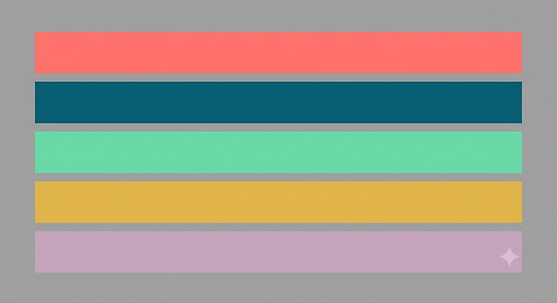
Here's an example of color pallets we could play between the two worlds.
I like these because Iowa is still nicely colorful such that our overall world isn't desolate, but then Floria is significantly more vibrant and saturated.
Trick Shots
I'm a big believer that a movie should have a few iconic shots. The movie needs to breathe and have some memorable visual moments.
On Last Train, we had a technocrane for a day to do this:
I'm not saying we'll definitely be able to afford an ultimate arm. But if we could I'm sure we could design an epic road trip sequence...
(I shot Happy Ending in LA, Detroit, and Thailand. It opened in 2,500 theaters worldwide)
Lens Choice
This is one of my favorite conversations. So many fun ways to approach this. For example, we could consider going with Zeiss Super Speeds for the 80s, and Cooke S4s for the 90s.


I just happened to have shot two music videos with the same band sitting on a couch with these lens sets.
The image on the left is Zeiss Super Speeds MKIIs. They have more of a vintage feel, harder fall-off, but still crips and beautiful. A lot of popular movies in the 80s were shot on them.
The image on the right was shot was shot on Cooke S4s. Sharper, more clarity. More of an immediate feel. A bit more modern, but still vintage. Softer fall-off
(by the way, I own both of these lens sets. We could test 'em!)


There's also always anamorphic to consider. Here are two images from a commercial I shot on Panavision G Series anamorphics. They are possibly the best lenses in the world. The color rendering, the resolution, the perfect fall off on the edges, the sharp but not-too-sharp crispness, vintage but timeless...
(I've been a co-signor with Panavision for over a decade so I have a good relationship with them. If you like this look, I would try for a deal. But at the very least, let's test 'em! It's hard to go back to regular optics once you've experienced these lenses in their full glory)
Approach - Different Modes
I believe my job as a DP is 50% making it pretty and 50% making the day.
I will always try to maintain a certain level of quality, but I know that some days you gotta fly. I pride myself on being good and fast, and I manage my team to do the same.
Not too long ago, I shot a 14 day feature. We successfully did a 16 page day with minimal sacrifice. There's always a way to get it done. X
Psst...If you're still reading, here's a private link to see some clips from my most recent movie, TOAD
bottom of page